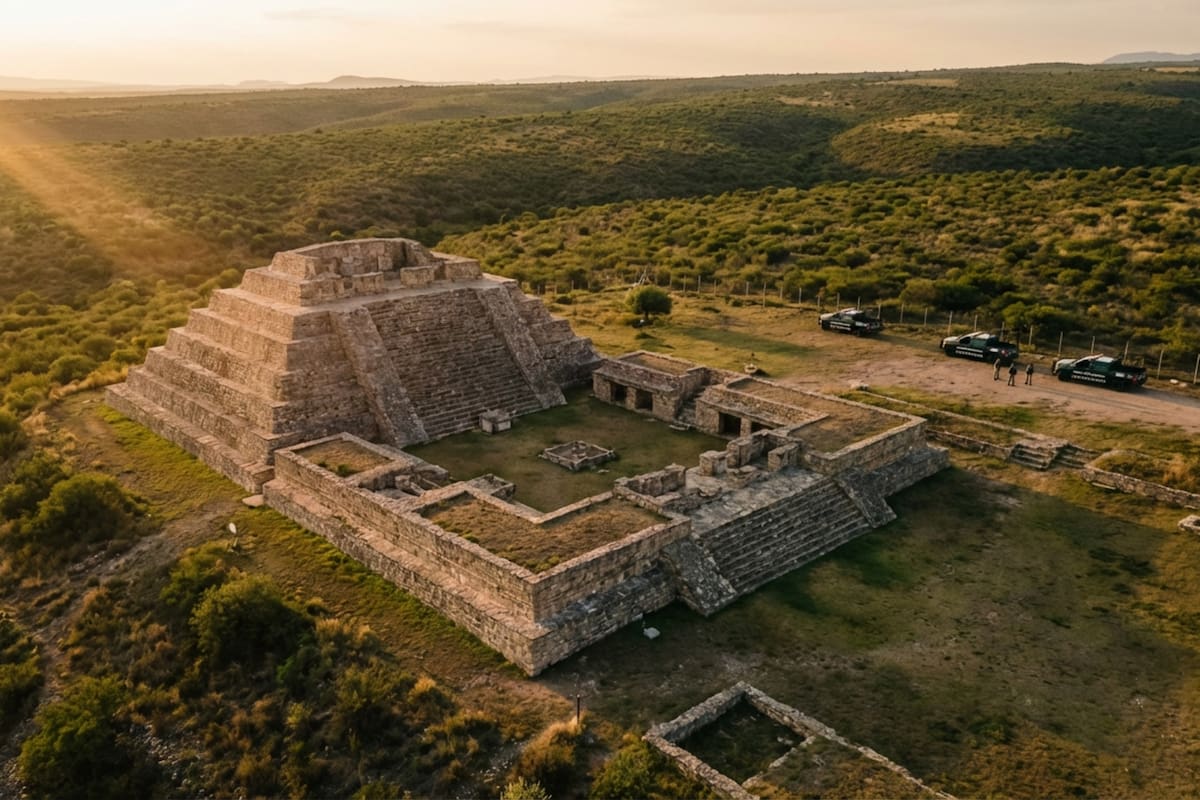
The cultural heritage of the state of Guanajuato has received definitive legal and institutional protection. The Ministry of Culture of the Mexican government, acting through the National Institute of Anthropology and History (INAH), formally took possession of a strategic property encompassing more than 700 hectares within the boundaries of the Cañada de la Virgen Archaeological Monument Zone. This action, reported by El Sol del Bajío, is the culmination of a presidential decree of expropriation published in the Official Gazette of the Federation, which declares the public utility of these lands in the municipality of San Miguel de Allende to guarantee their investigation, protection, and restoration.
The legal taking of possession represents a milestone for Mexican archaeology, since previously the management of the site faced territorial limitations that hindered the comprehensive study of the settlement. With this decree, the Mexican State ensures that the area will not be subject to real estate development or activities that endanger the archaeological remains. Many visitors and specialists wonder why Cañada de la Virgen was expropriated in 2026; The INAH’s technical response lies in the need to safeguard a space of high historical and symbolic value that contributes to the right of Indigenous peoples to preserve their sacred sites, as stipulated in Article 2 of the Constitution.
Key points of the new management at Cañada de la Virgen:
Military Protection: The National Guard actively collaborates with the INAH to monitor the site and prevent invasions or looting in the areas that have not yet been explored.
Scientific Potential: The site is a multiethnic settlement with a ceremonial layout aligned with astronomical phenomena, making it unique in the Bajío region.
Upcoming Infrastructure: Signage, security, and physical demarcation of the land will begin to ensure the orderly management of tourist visits.
Long-Term Conservation: Legal ownership allows the institute to allocate federal resources directly to the restoration of mounds and residential areas.