Cantinflas arrived dressed as a priest in a fictional town, but ended up leaving behind a very real piece of Guanajuato. It’s still there, among facades, bells, and alleyways that can still be explored.
Some films function almost like time capsules, even if you don’t watch them that way. They’re famous for their comedy, for the characters, for the nostalgia of watching them on Sunday afternoons on broadcast television, and suddenly they reveal something else that was previously overlooked: a city before it became a postcard image, a street without so many people, and a plaza where there weren’t yet so many tourists. This is especially true with Cantinflas. His films not only hold jokes, but also a part of Mexico.
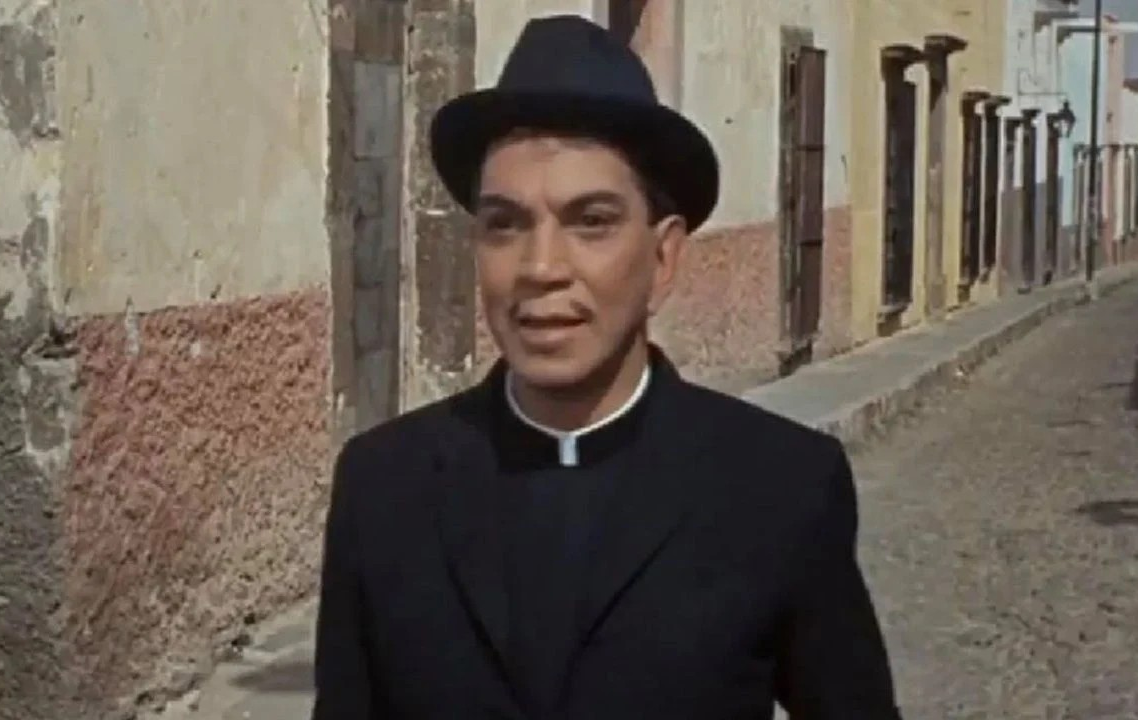
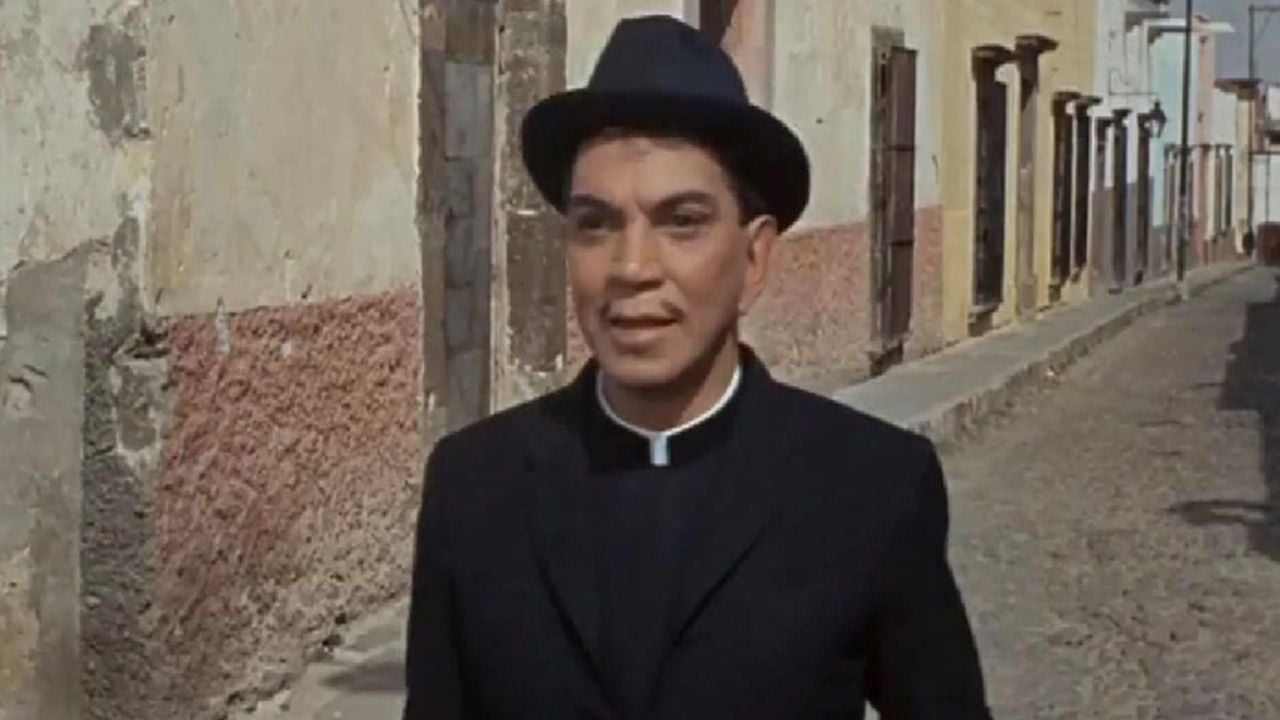
“El Padrecito” has a strange, family-friendly feel that, seen through different eyes, allows you to see San Miguel de Allende. It’s not the city of perfect photos, crowded terraces, and freshly painted facades, but a more everyday, less polished version for visitors. The 1964 film, directed by Miguel M. Delgado, features Cantinflas as Father Sebastián, a young priest who arrives in a town where not everyone welcomes his ideas with open arms.
The streets that appear in “El Padrecito” are in the heart of San Miguel de Allende. Among the identified locations are Calzada de la Aurora, Canal Street, the area around the Parish of San Miguel Arcángel, the Umarán and Relox neighborhoods, and the Church of San Francisco. On screen, the route lacks the touristy glamour of today. It has more the feel of a “small town” than an international destination.
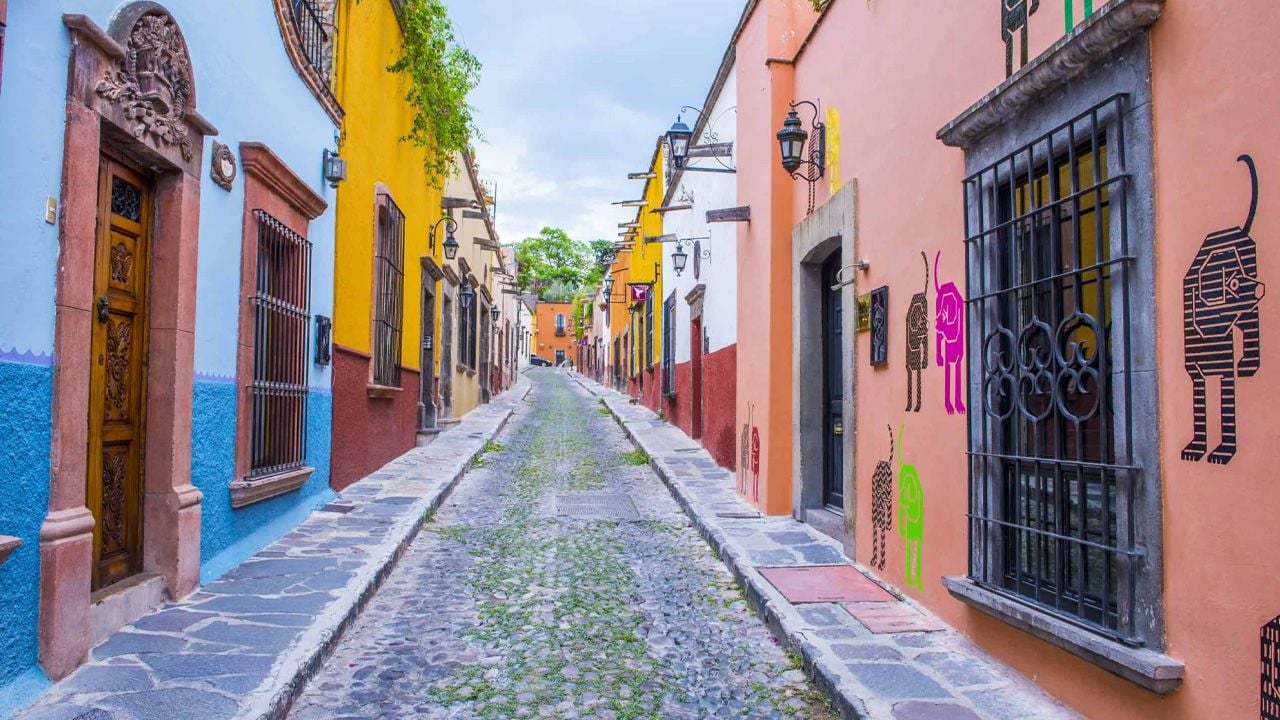
One of the most striking entrances is Father Sebastián arriving via Calzada de la Aurora and continuing onto Canal Street. Today, that route might feel very different, with galleries, shops, well-maintained facades, and tourists strolling with their cell phones in hand. In the film, however, the area appears drier and more run-down, a far cry from the pristine image that San Miguel currently promotes as one of its greatest assets.
The Church of San Francisco is one of the most prominent locations featured in “El Padrecito.” Today, the church retains an appearance very similar to that seen in the film. The bullring is also mentioned as another space that still allows us to see the bridge between the San Miguel filmed by Cantinflas and the one experienced by visitors today.
The story wasn’t limited to the religious imagery. Father Sebastián arrives in San Jerónimo el Alto to assist Father Damián, but his approach to the community doesn’t initially sit well with them. Through wordplay, absurd situations, and his characteristic humor, Cantinflas transforms the character into a less traditional priest, more relatable to the people, even if it means getting into trouble.
San Miguel de Allende already had a rich history before being featured in “El Padrecito.” The city was founded in the 16th century and reached one of its most important architectural periods in the 18th century, when several civil and religious buildings were erected in the Mexican Baroque style. In 2008, the San Miguel complex and the Sanctuary of Jesús Nazareno de Atotonilco were inscribed on the World Heritage List.
Returning to the film’s locations feels part tourist outing and part emotional archaeology. Walking through the streets, gazing at the Parish Church, or approaching San Francisco Church no longer means seeing the exact same landscape Cantinflas saw, but it does allow you to recognize the foundation of that city filmed six decades ago. The cobblestones, the towers, the thick walls, and the plazas still do much of the work.