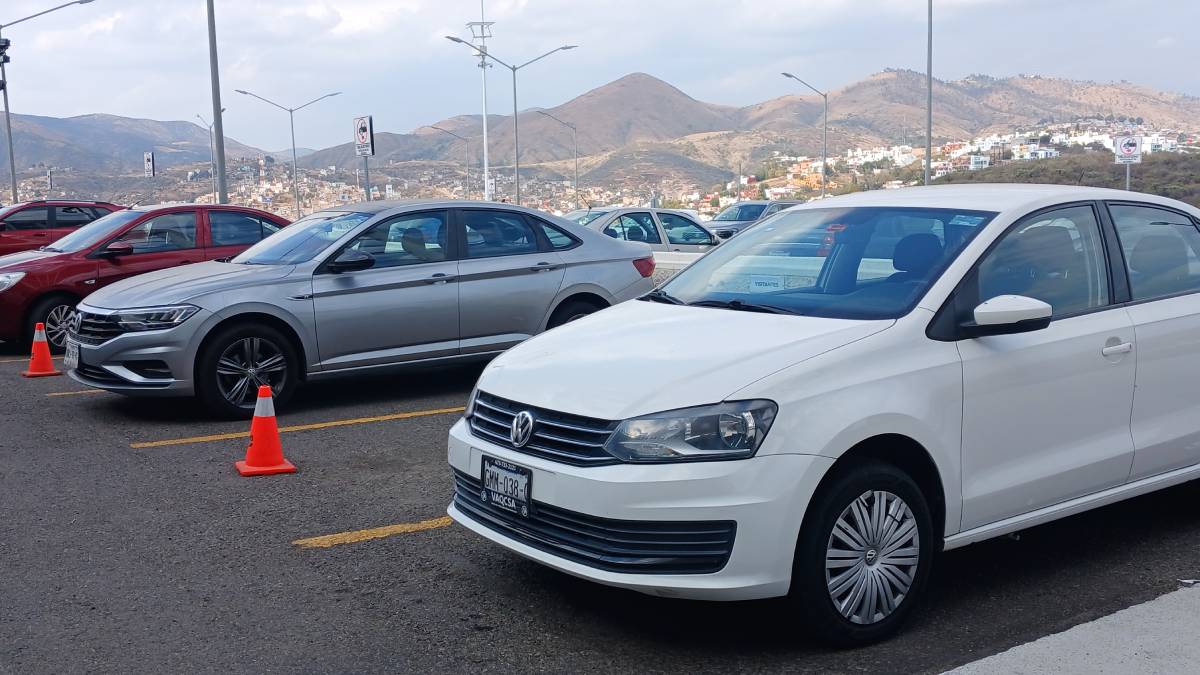
By 2026, all Guanajuato residents who own a car will have to pay an additional 508 pesos in vehicle registration fees.
This is because the current fee for motor vehicles, trailers, and semi-trailers is 672 pesos. However, starting January 1, 2026, it will increase to 1,180 pesos, a rise of 508 pesos, representing a 76% increase. For motorcycles, mopeds, and similar vehicles, the current fee of 165 pesos will increase to 200 pesos, a rise of 35 pesos.
This is one of the fees for public services provided by the State Government, the increase of which was identified by AM when comparing the current Revenue Law with the proposed State Revenue Law for 2026, which was submitted by the governor to the local legislature on November 25 and will be discussed in the coming days in the State Congress.
This increase is even higher than the one applied this year, since in 2024, the vehicle registration fee was 572 pesos. On December 17, the local deputies increased it by 100 pesos, so that this year it has cost 672 pesos.

The state’s vehicle registry, as of November 30, includes 2,489,030 vehicles, both public and private, according to the Ministry of Finance.
Of that amount, 1,789,256 vehicles are cars, passenger and cargo trucks, and trailers, all of them public and private. This means that Guanajuato residents will pay 508 pesos more for their cars or trucks. An additional 699,774 are motorcycles, the same number of owners who will pay 35 pesos more for their vehicle registration renewal.
The explanatory statement of the Revenue Law initiative explains that the increase in the renewal fee is justified by a comparative analysis of the costs of this service among the federal entities.
“For license plate renewals, the average cost for cars is $1,180.00 and for motorcycles $752.00, placing Guanajuato among the lowest in the country,” it was explained.
The same measure was taken to increase the cost of issuing license plates for cars and motorcycles for the first time.
They seek to raise one billion more pesos: AMDA
Interviewed on the matter, Arturo González Palomino, president of the Association of Automotive Distributors of the State of Guanajuato, stated: “What we see with this increase is that the State is seeking to raise one billion pesos more.”
Today, it’s a blow to taxpayers. Because they need resources and lack the ingenuity or creativity to acquire state funds, the Secretary of Finance is now trying to get his hands on a billion pesos, further squeezing the already struggling economy of Guanajuato families.
This comes on top of the rising fuel and public transportation costs.
In an interview with AM, he argued that this increase affects ordinary citizens who own cars they’ve been paying off for five years, especially since public transportation in Guanajuato’s main cities is both inadequate and expensive.
He criticized the fact that the increase is being passed on to the citizens, given that the Secretary of Finance only increases public resources through debt and tax hikes, failing to develop other strategies.
“I mean, how convenient to spend money instead of generating revenue, like with the parking lots or the highways they handed over,” complained the representative in Guanajuato of the Mexican Association of Automotive Distributors.
Deputy Jorge Espadas Galván, coordinator of the PAN (National Action Party) caucus in the State Congress, said he does not foresee any significant modifications to the 2026 budget proposed by the governor.
At the state PAN press conference, he commented that the proposed increases represent “pennies” that affect citizens.
“Regarding the analysis of the fiscal package, we are making significant progress in reviewing the 46 municipal laws, and we have begun reviewing the Revenue Law. In our initial review, the parliamentary group considers the modifications proposed by the governor to be pertinent; however, we must continue reviewing some specific increases that amount to pennies. The analysis is not yet complete; we are exhausting the review of the municipal revenue laws and will begin with the state budget,” Espadas stated.
Regarding the state budget, he emphasized that “we do not foresee major changes. The report from the Joint Committees will be released as written, allowing for some adjustments to be made in the full Congress.”
Source: am