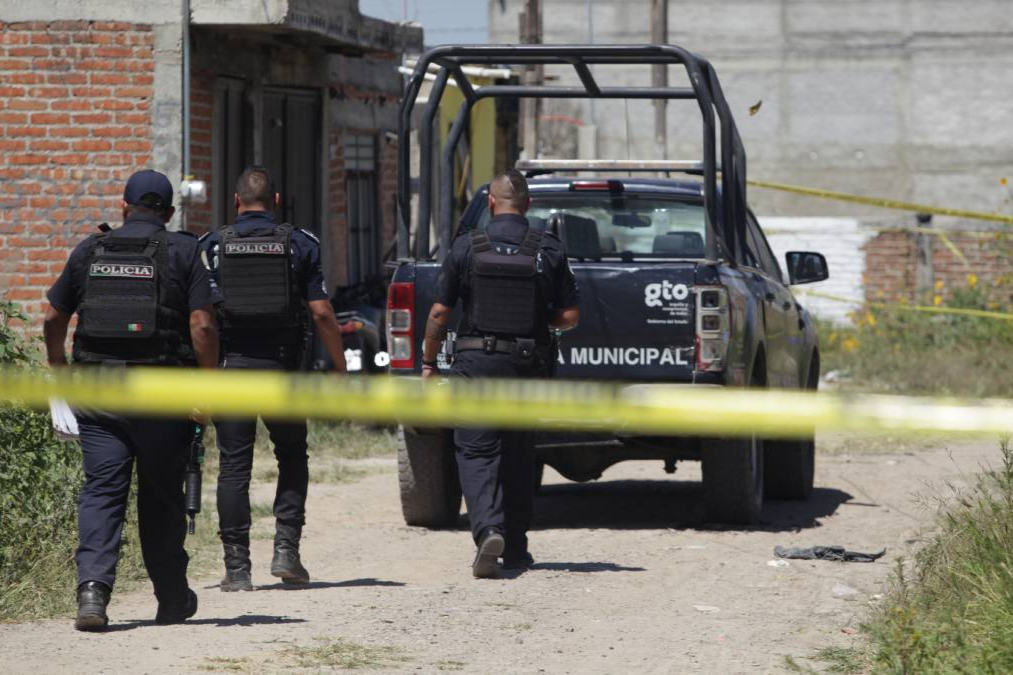
Only three out of every ten people in Guanajuato believe that the police provide a sense of security, placing the state among the eleven worst-ranked in the country. This was revealed by the 2025 National Survey on Government Quality and Impact (ENCIG).
With a public confidence perception rate of 33.6%, Guanajuato has remained among the lowest-ranking states for the third consecutive survey cycle, showing virtually no significant improvement over recent years. The figure stood at 31.5% in 2021 and 31.9% in 2023.
The state ranked only above:
- Tamaulipas (33.2%)
- Veracruz (32.4%)
- Estado de México (28.2%)
- Quintana Roo (28.2%)
- Puebla (27.5%)
- Zacatecas (27.3%)
- Baja California (26.1%)
- Guerrero (25.8%)
- Tabasco (25.1%)
- Morelos (23%)
- Michoacán (21.4%)
By contrast, the states with the highest public confidence in law enforcement were Yucatán (60.9%), Coahuila (54%), and Nuevo León (53.8%).

The survey evaluated municipal, state, and federal security institutions. In response, Guanajuato’s Secretariat of Security and Peace stated that public perception of security is influenced by many factors, including personal experiences, media coverage, social media narratives, institutional trust, and daily conditions within each municipality.
Authorities emphasized that, beyond perception surveys, objective crime statistics should also be considered. According to the Secretariat, Guanajuato has experienced a sustained decline in intentional homicide victims over the past year, dropping from a daily average of 12.7 victims in February 2025 to 4.3 in April 2026 — a reduction of 66%.
Despite these figures, the National Urban Public Security Survey (ENSU) for the first quarter of 2026 identified Guanajuato as one of the states where residents feel the most unsafe.
Irapuato ranked as the municipality with the highest perceived vulnerability in the country.
In the same survey, both León and Guanajuato exceeded the national average insecurity perception rate of 61.5%, placing them among the cities with the weakest sense of public safety.
Even so, the state government argued that the reduction in high-impact crimes during the first four months of 2026 compared to the same period in 2025 demonstrates that the Operational Coordination Strategy of the New Anti-Crime Intelligence Force (CONFÍA) is working.
“Although there is still much to do, the data show that we are moving in the right direction,” authorities stated.
Officials also acknowledged that public perception usually changes more slowly than crime statistics, especially after highly publicized violent events.
According to the government, the CONFÍA strategy aims to:
- Strengthen relationships between police and citizens
- Improve coordination with municipalities
- Consolidate intelligence and investigative operations
- Build greater institutional trust
“The challenge remains enormous, but today Guanajuato has a strategy based on interinstitutional coordination and investigative work aimed at reducing violence and restoring peace to families,” the Secretariat added.
In other categories evaluated by the ENCIG survey, Guanajuato performed considerably better.
Regarding water service and drinking water quality, the state ranked second nationally, behind only Tlaxcala, with 42.5% of residents expressing favorable opinions.
Additionally:
- 85.1% of Guanajuato residents said they were satisfied with public service procedures, payments, or administrative requests.
- The state ranked 11th nationwide in citizen trust in government, with a confidence level of 43.6%.
States with higher government trust levels included:
- Nuevo León
- Coahuila
- Querétaro
- Aguascalientes
- Chiapas
- Tabasco
- Yucatán
- Tamaulipas
- Campeche
- San Luis Potosí
Public opinion on the police
Several residents interviewed shared mixed or negative opinions about police effectiveness and corruption.
Some residents said they had witnessed arrests but also believed that innocent people are sometimes detained. Others complained about slow response times, corruption, extortion, and lack of trust in law enforcement.
One resident said:
“I don’t know whether to feel protected or harmed by the police. I’ve been robbed several times and they never respond.”
Another criticized the widespread perception of bribery:
“Sometimes they catch criminals in the act, but a few minutes later they are released. People think officers take bribes and let them go.”
Others complained that patrol units can take up to an hour to arrive during emergencies, while some argued that police presence is often practically nonexistent.
Municipal police handle most crimes with the lowest budgets
Security expert Bernardo León Olea criticized the financial and institutional neglect faced by local police departments during the presentation of his book Azul Puro.
According to León Olea:
- Municipal police officers make up only 33% of the country’s public security force.
- However, they carry out 80% of all arrests nationwide.
He described local police as the true first line of civic justice and crime prevention.
León Olea also compared arrest costs between security forces:
- A municipal police arrest costs less than 60,000 pesos.
- A Guardia Nacional arrest reportedly costs the federal government around 24 million pesos.
He strongly criticized federal budget policies that prioritize centralized security models while local police continue operating with limited resources.
The expert also questioned the monopoly held by prosecutors’ offices over the formal reception of criminal complaints, arguing that this contributes to Mexico’s 90% “dark figure” of unreported crimes.
He emphasized that Mexican law already authorizes municipal police departments to receive complaints and begin preliminary investigations, arguing that empowering local officers legally and institutionally could help dismantle neighborhood-level criminal networks more effectively.
Source: am