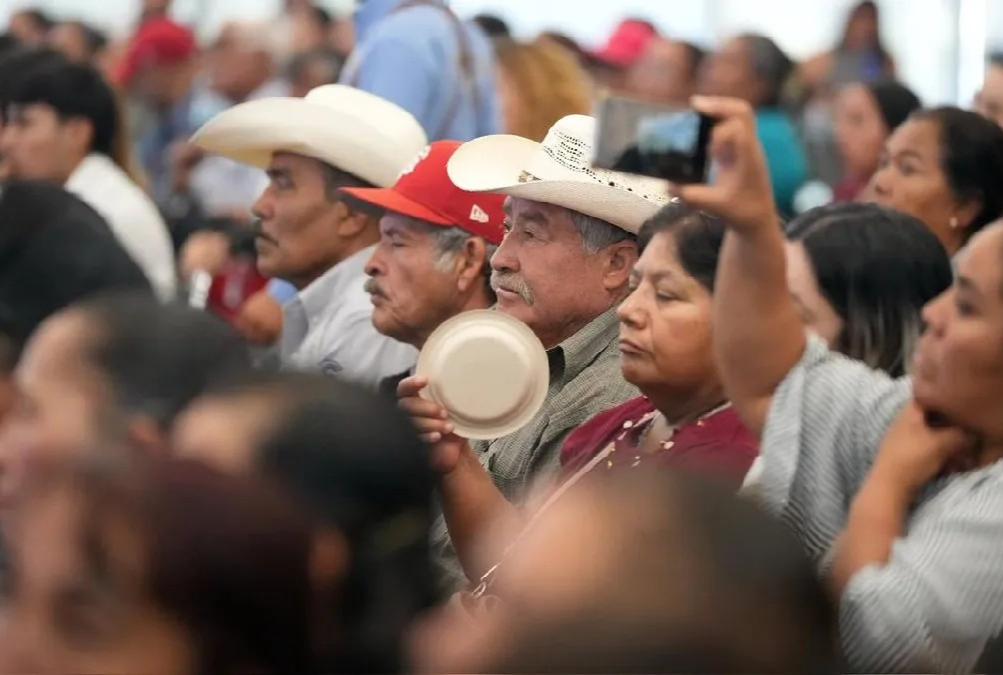

The Foro Migrante Guanajuato, organized by lawmakers from the Partido Acción Nacional in the local Congress, highlighted the challenges faced by Mexican migrants in the United States and examined the difficulties they encounter daily in order to determine how authorities and organizations can respond.
One of the major concerns discussed during the forum was the implementation of new fines reportedly reaching up to 1.8 million dollars for undocumented migrants in the United States, measures that participants described as intended to create fear among migrant communities.
“They are being warned that they must leave now or face consequences,” explained forum panelist Denise Platter Cabrera in an interview with AM.
According to Platter, letters are being sent to people with deportation orders or to those who had previously been granted voluntary departure but did not leave the country.

“They are receiving letters giving them 10 or 15 days to respond about whether they will leave the United States or pay a fine. If they agree to leave, the fine may be forgiven,” she said.

Migrants urged to respond and appeal
Platter recommended that migrants respond to the notices, appeal the sanctions, and formally express disagreement with the penalties.
“Years ago, when deportation orders were issued, the standard fine was always between one thousand and five thousand dollars. Authorities had never talked about 1.8 million dollars, so it is unfair for them to suddenly claim the fine is that high,” she explained.
She added that the purpose of these anti-immigration measures is to intimidate migrants into leaving voluntarily.
“Migrating is not a crime”
Under the slogan “Building bridges on both sides of the border,” the forum was presented as a citizen listening exercise and open parliament initiative focused on migrant needs.
“It is important to inform migrants of their rights in the United States. Even if they do not have legal status, they still have rights. Many qualify for immigration benefits and simply do not know it,” Denise Platter added.
Jorge Espadas Galván, a state congressman, stated that Guanajuato cannot be understood without its migrant communities and reaffirmed his party’s commitment to continue legislating in defense of migrant rights.
“Migrating is not a criminal act; it is a way to survive and start over,” he said. “This event highlights the importance of defending the rights of migrants and their families.”
Meanwhile, migrant representative Yesenia Rojas Cervantes emphasized that migration represents sacrifice, work, and hope for thousands of families.
“Behind every migrant there is a family pushing dreams forward, facing challenges, and working to build a better future,” she said.
Concerns over remittances
Forum participants also discussed stricter identification requirements for sending remittances, policies reportedly linked to measures promoted by Donald Trump.
Yesenia Rojas argued that the Mexican government should play a stronger role in defending migrants through better diplomatic negotiations.
She noted that migrant communities are especially worried because Guanajuato is one of Mexico’s leading states in remittance income.
“Many families are not only bank account holders; they own homes and businesses. Right now, organizations and community groups are trying to organize support systems to help them,” she explained.
According to the legislator, these measures hurt ordinary working families rather than criminals.
“This is a hard blow against the Mexican government and I believe the federal government needs to activate stronger legal assistance and take different actions,” she said.

Calls for better negotiations
Rojas insisted that Mexico must improve its negotiations with the United States.
“This affects our families, including those living here who are not responsible for any of this,” she stated.
She described Trump as a businessman who knows exactly what he wants and argued that Mexico needs stronger dialogue at the federal level so migrants are not treated as political leverage.
“We are families who work every day and contribute to both countries,” she said.
Increase in returning migrants
Susana Guerra Vallejo reported that approximately 1,500 returning migrants have recently received assistance in Guanajuato.
She explained that anti-immigration rhetoric against Mexican migrants has intensified over recent months.
“We are beginning to see in Guanajuato, particularly in the Bajío region but also throughout the country, a gradual but constant increase in deportations and voluntary returns,” she said.
“Our community is very afraid. Unfortunately, we do not see any sign of relief in this situation.”
Voices from the forum
Participants from various communities also stressed the importance of information and legal guidance for migrant families.
Residents noted concerns about:
- Fear of detention among migrants in the United States
- Rising costs and taxes affecting remittance transfers
- Lack of information about legal rights and documentation issues
- Potential closures or underfunding of Mexican consulates
“Yes, people are very worried,” several attendees agreed, emphasizing that migrant families need legal support, reliable information, and stronger institutional assistance during an increasingly difficult moment for Mexican communities abroad.

Source: am