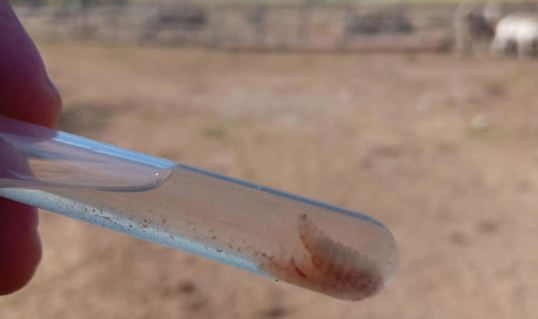

Rocío Cervantes Barba, president of the Commission on Rural Development and Agricultural Promotion, presented a point of agreement before the Plenary of the Congress of the State of Guanajuato to urge federal and state authorities to strengthen prevention programs and coordination between entities, with the aim of avoiding cases of screwworm in humans and preventing an increase in infections in cattle.
“The situation in Guanajuato must be analyzed as part of an interconnected system, where the lack of control in other states directly affects its risk level. Insufficient inter-institutional coordination and the absence of comprehensive national strategies could worsen the state’s exposure to the eventual arrival or increase of cases,” she stated.
The legislator warned that the vulnerability of the state cannot be analyzed in isolation, but as part of an interconnected system in which the lack of control in other regions of the country increases the risk for Guanajuato. She noted that, if a comprehensive national strategy and effective inter-institutional coordination are not consolidated, the state could face the arrival or increase of cases related to this condition.
“Guanajuato is a state with an important agricultural vocation, with large rural areas in vulnerable conditions. These characteristics, far from being a weakness, should be addressed through targeted public policies; however, they also imply sanitary risks that require permanent attention and effective coordination between authorities,” she said.