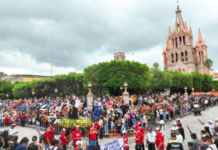
Relatives of children with cancer demonstrated in the city of Salamanca to demand medicines from IMSS-Bienestar (Mexican Social Security Institute). In this context, the Guanajuato Health Secretariat announced that chemotherapy treatment at the León Hospital is guaranteed.
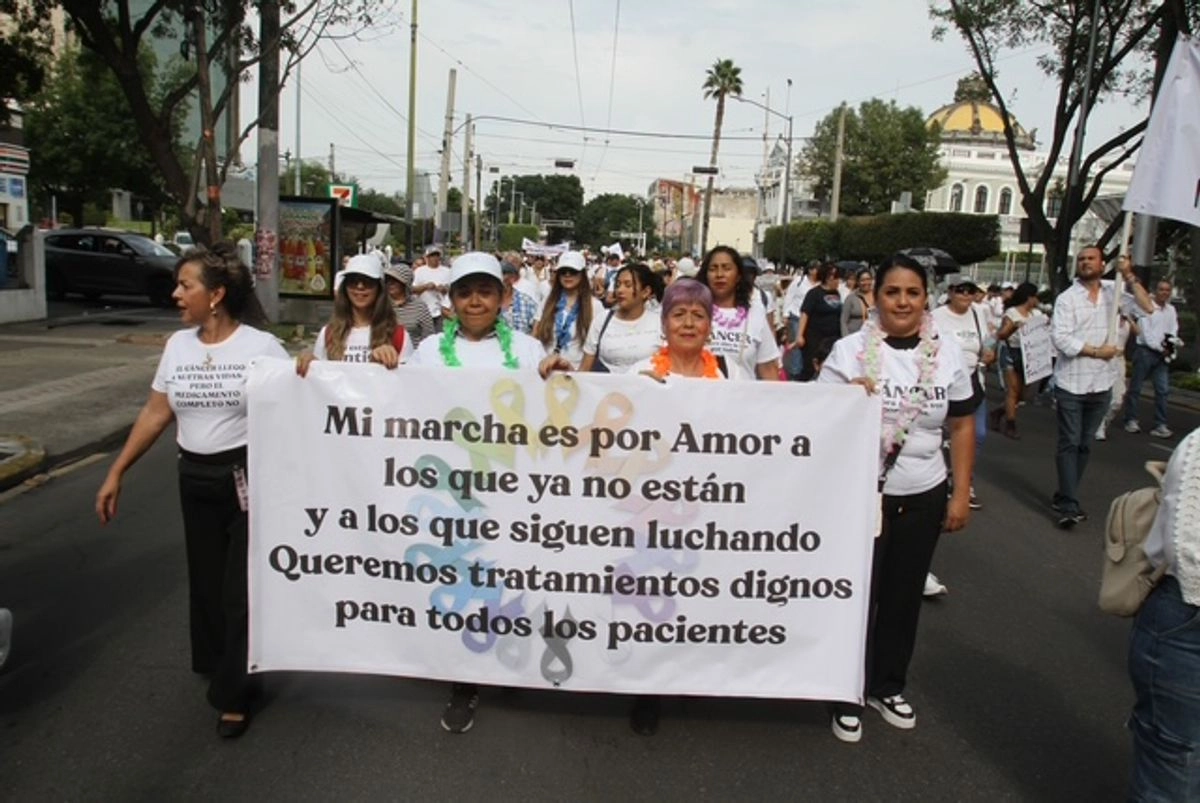
“IMSS-Bienestar, national fraud” and “We want medicines!” were the slogans of the parents who joined the nationwide mobilization against the drug shortage.
Since 2018, there has been no cisplatin, doxorubicin, carboplatin, cyclophosphamide, asparaginase, methotrexate, vincristine, and etoposide, they charged.
The president of the Ángeles de Pie Association for Children with Cancer, Leticia Rojas Rodríguez, led the march, which was attended by dozens of people.
It’s a lie that 96 percent of cancer medications are available; The Ángeles de Pie Association alone cares for 170 children in Guanajuato, Jalisco, Zacatecas, and Michoacán who do not have access to medicine through the IMSS-Bienestar program, he added.
Due to the lack of medicines, children have suffered relapses and deaths have been recorded, he stated.

There are medicines in Guanajuato.
Guanajuato’s health system has not been integrated into the IMSS-Bienestar program. In the context of the demonstration, the Ministry of Health stated that chemotherapy for children, adolescents, and adults is guaranteed in the hospitals of León and Celaya. In Celaya, only pediatric cancer cases are treated.
“According to the 2024 Pediatric Oncology report, 90 cases of childhood cancer, 230 cases of breast cancer, and 71 cases of cervical cancer in women are currently being treated,” said Health Secretary Gabriel Cortés.
He added that the survival rate exceeds 75 percent, while the national average is 56 percent.
“Thanks to the state policy of ensuring the right to health for cancer patients and the lack of adherence to IMSS-Bienestar, Guanajuato can maintain comprehensive care strategies,” he emphasized.
In patients ages 0 to 19, the main types of cancer are leukemia and solid tumors, he explained.
“Treatment lasts approximately two years, followed by a period of four to six years of medical follow-up to ensure the disease does not recur,” explained Gabriel Cortés.
Source: jornada