More than half of the state’s municipalities lack a Sexual and Gender Diversity Unit, hindering the implementation of public policies focused on the community and resulting in non-compliance with the Law for Persons of Sexual and Gender Diversity.
Hazael Ruiz, a member of the Pride Festival Committee in the city of Guanajuato, noted that organized civil society has encountered municipal governments lacking the will or budget to carry out initiatives supporting sexual and gender diversity. One excuse they offer, he remarked, is that they do not have a Sexual and Gender Diversity Unit in place.
“I believe the fundamental step is to establish these units so that projects can be generated and mainstreamed through them. These units are the ones with the mandate to act; unfortunately, in municipalities where we find a lack of political will to implement them, one of the arguments given is that creating such projects or programs falls outside their jurisdiction,” he explained.
The activist pointed out that, interestingly, it is the smaller municipalities—rather than the large cities along the industrial corridor—that are setting the example by establishing a directorate or unit dedicated to sexual and gender diversity.

Municipalities such as Pénjamo and Purísima del Rincón are making greater strides than cities like Salamanca or even León—where the process of appointing a director was arduous, he acknowledged.
“This situation is unique because the state’s smaller municipalities are the ones making the effort to establish these units; we see this drive in places like Romita, Irapuato, Pénjamo, Cortazar, Salvatierra, and San Miguel de Allende. I believe the major cities along the Industrial Corridor should make an effort to learn from the best practices of these municipalities and understand how to put the law’s mandates into action,” he explained. Hazael Ruiz urged municipal governments that have yet to establish such a unit not to “stand on the sidelines,” appealing to their willingness and respect to address the lived experiences of populations with specific needs stemming from structural inequalities.
“We believe that the very scope of implementation is being left out. We urge municipalities to establish their units and drive projects forward; there is still time to secure a budget,” he stated.
In December 2025, the Congress of Guanajuato approved reforms to the Civil Code modifying the definition of marriage to recognize it as the free union of two people—replacing references to “man and woman” with “spouses”—thereby explicitly incorporating marriage equality into its civil legislation.
The amendment updates the local legal framework in accordance with the criteria of the Supreme Court of Justice of the Nation, which has held since 2015 that limiting marriage to heterosexual couples is unconstitutional.
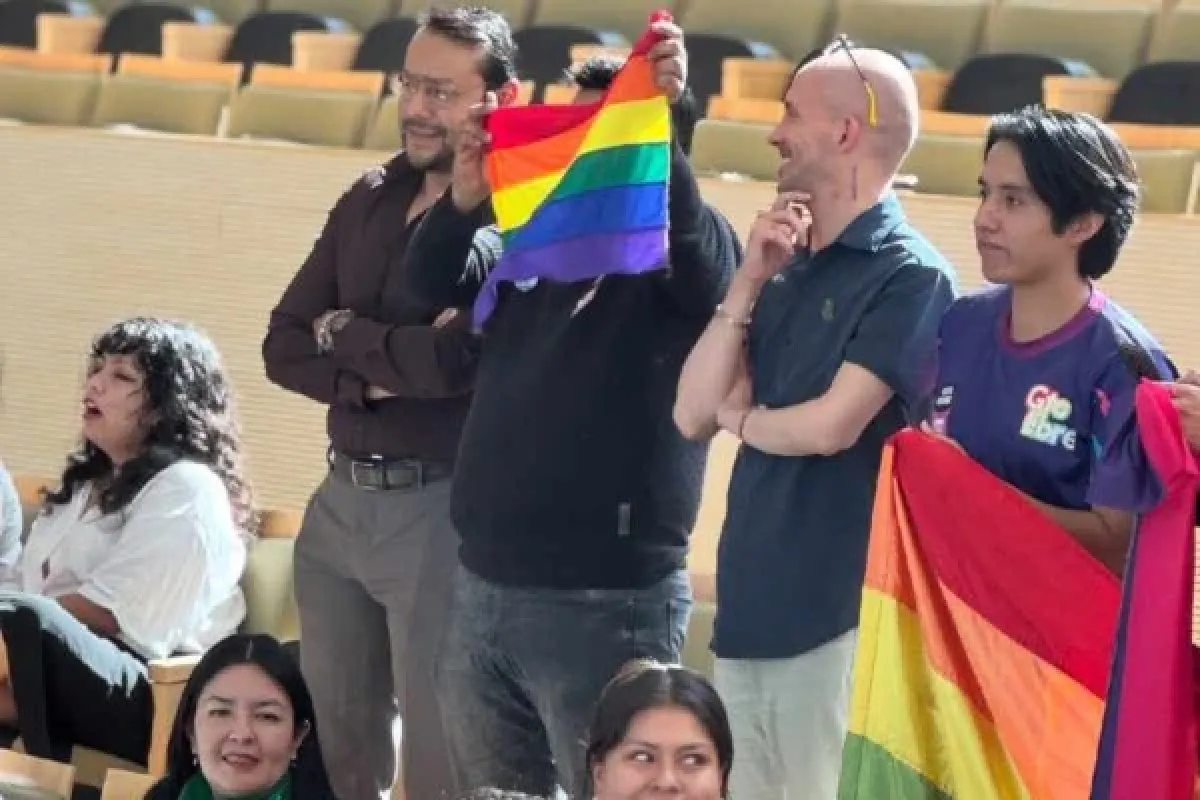
During the debate, Deputy María Eugenia García Oliveros highlighted that the legislative update seeks to align state law with constitutional and international human rights standards.
Similarly, Deputy Sergio Alejandro Contreras Guerrero asserted that the exclusion of same-sex couples lacked legal justification and was discriminatory, emphasizing that the legal framework must reflect social reality.
Source: grupoanimal